
Your Year-End Home Review: What to Maintain, Improve, and Plan for 2027
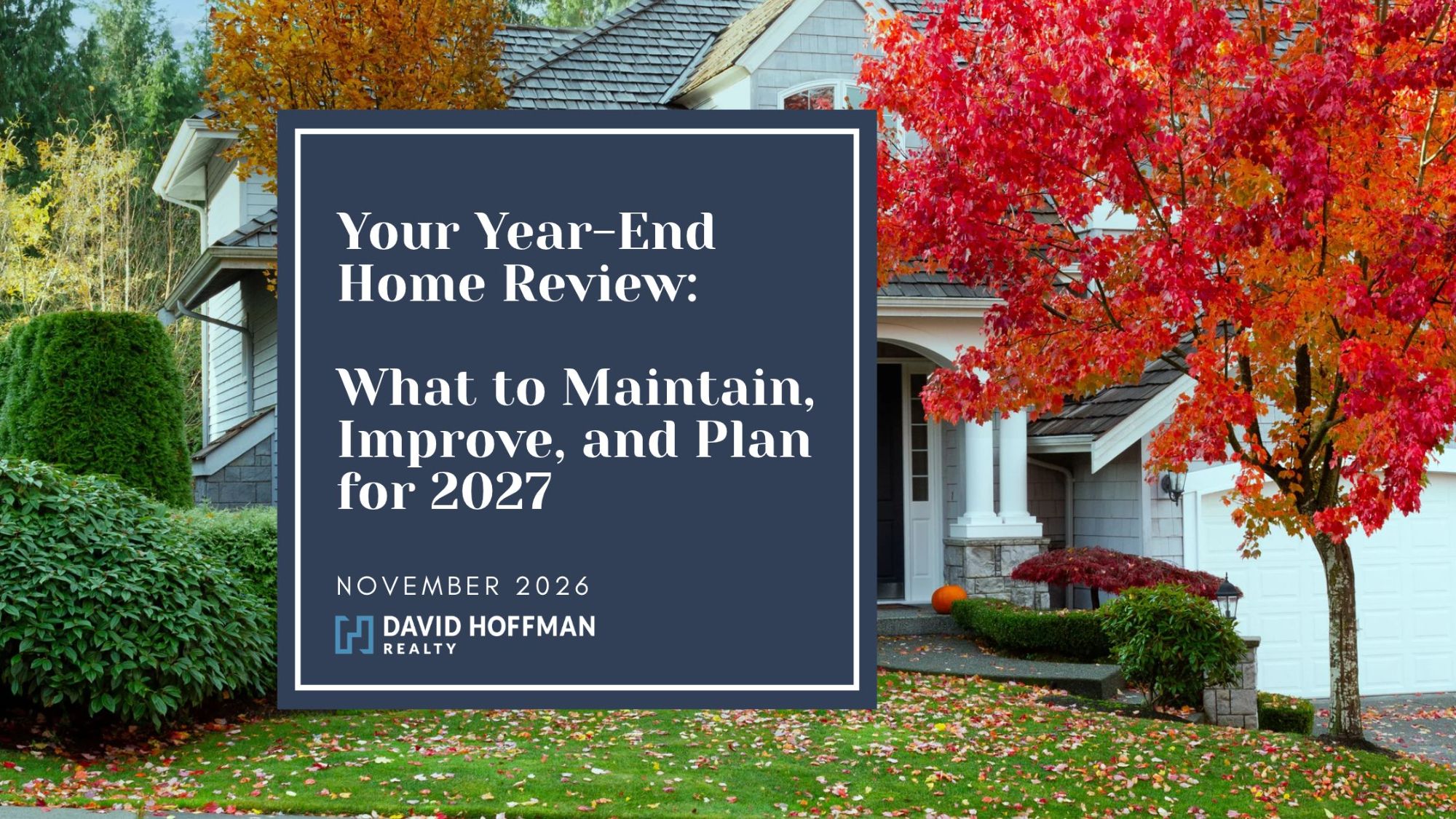
Your Year-End Home Review: What to Maintain, Improve, and Plan for 2027
November has a way of bringing our homes into focus. We make room for guests, pull out the serving dishes, and notice the projects we meant to finish months ago. Somewhere between preparing for the holidays and looking toward a new year, a bigger question often surfaces: What does our home need next?
For some homeowners, the answer is routine maintenance. For others, it is a thoughtful update or the beginning of a conversation about moving.
Before adding another project to your list, take a step back. A year-end home review can help you identify what deserves attention, where to focus your resources, and how your home fits into the year ahead.
Start With the Condition of Your Home
It is easy to notice dated lighting or a paint color you no longer love. The less visible parts of a home deserve attention, too.
Use this season to review the systems and exterior features that protect your property. Check when your heating system was last serviced, whether gutters and downspouts need clearing, and whether windows or exterior doors have noticeable drafts. If you use a fireplace, arrange appropriate professional inspection and cleaning before the season’s first fire.
Realtor.com’s fall maintenance guidance highlights these same priorities, along with testing smoke and carbon monoxide alarms and preparing outdoor plumbing for freezing weather.
For Charlotte-area homeowners, make the review specific to your property. A wooded lot, an older home, and a newer townhome may require different maintenance plans. Have a qualified professional evaluate concerns such as recurring moisture, damaged roofing, or drainage problems.
Addressing an issue early gives you more opportunity to understand the cause, compare solutions, and plan the work.
Separate Necessary Repairs From Optional Updates
Once you begin looking around, almost everything can feel like a project. A simple way to make the list manageable is to divide it into three categories:
- Maintenance and repairs that protect the home or address a current problem.
- Improvements that make everyday life easier or more enjoyable.
- Cosmetic changes you would like to make when time and budget allow.
A leaking window belongs in a different category from new dining room wallpaper. Both may matter to you, but they serve different purposes and deserve different timelines.
For each project, ask: What problem does this solve? What happens if we wait? Will we enjoy the result long enough to justify the expense?
These questions are especially helpful if you are unsure whether you will stay for another year or another decade. Start with the work that needs attention, then decide which additional changes fit your plans.
Consider Your Timeline Before Renovating
A renovation should make sense for the way you intend to use your home.
If you expect to stay for several years, personal enjoyment may be an important part of the decision. A kitchen that works better for your daily routine or a bathroom that feels more comfortable can have value beyond a future sale.
If a move is possible in 2027, speak with an agent before committing to a major project. Ask which improvements would address a meaningful concern for buyers in your home’s price range and which might be unnecessary for a sale.
You may discover that repairs, fresh paint, and careful presentation deserve attention before a larger renovation. Or your home may need more substantial work to compete with similar properties.
Avoid assuming that every dollar spent will return to you at closing. Evaluate the scope, cost, and likely benefit of each project. For larger work, compare written estimates that describe the same materials and tasks so you can understand what each proposal includes.
Organize the Information You Already Have
A useful home review includes paperwork as well as projects.
Create one place for service records, appliance information, warranties, contractor invoices, and documents related to completed improvements. Record when major systems were installed or replaced, and keep relevant permits and approvals with the project details.
This can be as simple as a digital folder with clearly named files.
When a service issue comes up, you will know whom to contact and what work has already been done. If you eventually decide to sell, those records can help you answer questions accurately and prepare for conversations with your agent.
Include a short list of outstanding concerns. A recurring leak or an intermittent equipment problem is easier to explain when you have noted when it happens and what has been tried.
Think About What You Want From Your Next Chapter
The end of the year is also an opportunity to revisit your priorities.
Perhaps you want less upkeep. You may be spending more time commuting than you expected, hoping to live closer to people you see regularly, or considering a different part of the Charlotte area.
Write down what you would like to change, then consider whether improvements to your current home could realistically address it.
A renovation may solve a storage problem. It cannot shorten the distance between your home and the places you visit every week.
If moving is a possibility, begin exploring communities through your own routine. Visit at different times of day, consider the trips you make most often, and think about the responsibilities that come with a different property.
You do not need to make a decision immediately. The purpose is to understand what would make a change worthwhile.
Give Yourself Time to Prepare
If selling next year is on your mind, an early conversation can help you work backward from a realistic timeline.
An agent can walk through your home, discuss its condition and presentation, and help identify preparation priorities. From there, you can consider when to schedule work, organize belongings, arrange photography, and review pricing closer to your listing date.
Planning ahead also gives you room to explore where you would go next. Understanding both sides of a possible move can help you decide whether the timing fits your life.
At David Hoffman Realty, we believe thoughtful guidance begins with understanding your goals. Whether you are caring for a home you love or considering a new address, our team can help you evaluate your options and prepare for what comes next.
As you look toward 2027, connect with David Hoffman Realty for a conversation about your home, your priorities, and your next steps.
Categories
Recent Posts










brian.goodman@davidhoffmanrealty.com
10715 Sikes Place Suite 125, Charlotte, Carolina 28277